
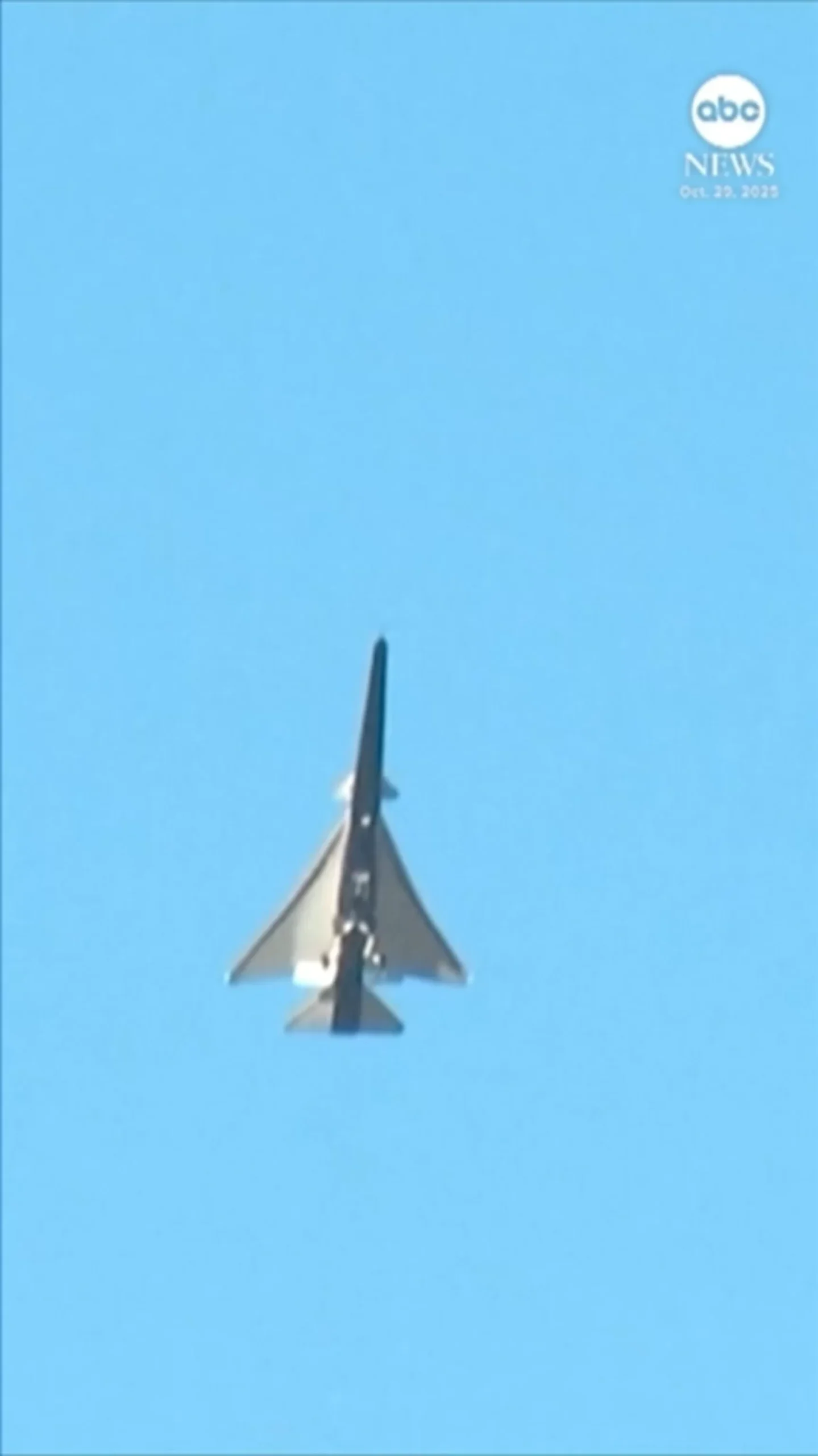
NASA’s supersonic X-59 jet has taken its first test flight this week, marking a significant step towards the future of supersonic travel. The highly anticipated flight, which took place in California, has been hailed as a major achievement for the agency and a promising development for the aviation industry.
The X-59 jet, also known as the Low-Boom Flight Demonstrator, has been in development for several years and is the result of a collaboration between NASA, Lockheed Martin, and other industry partners. Its main goal is to address one of the biggest challenges in supersonic flight – the loud sonic boom that occurs when an aircraft breaks the sound barrier. This has been a major barrier to the commercialization of supersonic travel, as it has been restricted over land due to noise regulations.
The successful flight of the X-59 is a significant milestone in NASA’s ambitious plans to bring back supersonic travel, which has been absent since the Concorde retired in 2003. The agency believes that the X-59’s advanced design and technology will pave the way for a new era of faster and quieter supersonic flights, making long-distance travel more efficient and accessible for passengers.
During the test flight, the X-59 reached a top speed of Mach 1.05, or about 807 miles per hour, and flew at an altitude of 32,000 feet. The flight lasted for about two and a half hours, with the jet’s systems and performance being closely monitored by a team of engineers and pilots on the ground. The X-59 also underwent a series of maneuvers to test its stability and handling, which were all executed flawlessly.
According to Dave Richardson, the director of NASA’s Commercial Supersonic Technology Project, the X-59’s first flight was a resounding success. He described the jet as “the future of supersonic travel,” highlighting its potential to revolutionize the industry and open up new opportunities for commercial airlines. Richardson also emphasized the X-59’s low sonic boom signature, which is expected to be about as loud as a car door closing, making it almost imperceptible on the ground.
The X-59’s advanced design is what sets it apart from previous supersonic jets. It features a long, slender shape with a pointed nose and delta wings, which help to reduce drag and increase fuel efficiency. The engines are also designed to produce a quieter, more efficient supersonic combustion to minimize noise. These innovations, combined with NASA’s cutting-edge technology, have made the X-59 a game-changer in the world of supersonic flight.
The successful test flight of the X-59 is just the beginning of its journey, as NASA plans to conduct more tests and gather data to validate its design and performance. The next phase of testing will involve flying over select communities in the United States to gather data on how people perceive the sonic boom. This will help to inform the development of new regulations and standards for supersonic flights over land, bringing us one step closer to a new era of supersonic travel.
The potential impact of the X-59 on the aviation industry is immense. Its low sonic boom signature could potentially open up new routes and reduce flight times, making long-distance travel more feasible and appealing for passengers. It could also lead to the development of new and improved supersonic aircraft, creating new job opportunities and driving economic growth in the aerospace sector.
In conclusion, NASA’s supersonic X-59 jet has taken its first test flight, marking a major milestone in the agency’s efforts to bring back supersonic travel. With its advanced design and technology, the X-59 has the potential to revolutionize the industry and pave the way for faster, quieter, and more efficient supersonic flights. This is indeed an exciting time for the future of air travel, and we can’t wait to see what the X-59 will achieve in the years to come.