
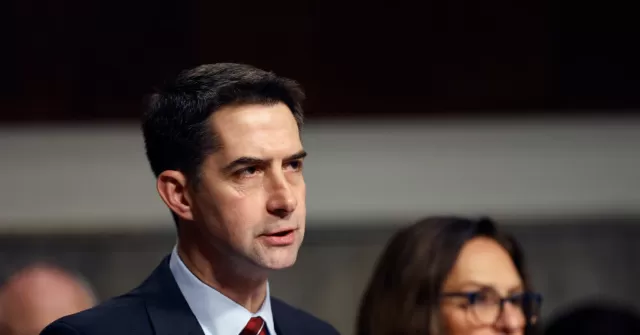
Senator Tom Cotton (R-AR) is set to introduce a bill on Tuesday that aims to significantly reduce the number of H-1B visa holders working in white-collar jobs in the United States. The proposed legislation, if passed, could have a major impact on the country’s workforce and immigration policies.
The H-1B visa program, which was created in 1990, allows U.S. companies to hire highly skilled foreign workers in specialized fields such as technology, engineering, and science. The program has been a popular option for companies looking to fill positions that require specific skills that are not readily available in the American workforce.
However, Senator Cotton argues that the program has been abused by some companies, who use it to bring in cheap foreign labor and replace American workers. He believes that the program has led to the displacement of American workers and the stagnation of wages in certain industries.
In a statement, Senator Cotton said, “The H-1B visa program was meant to help American companies fill skill gaps in their workforce, not to replace American workers with cheaper foreign labor. It’s time we put the interests of American workers first and make sure that our immigration policies are not harming our own citizens.”
Under the proposed bill, the number of H-1B visas issued each year would be reduced from the current cap of 85,000 to 60,000. It would also require companies to prioritize American workers and pay H-1B visa holders a higher salary, making it less attractive for companies to hire foreign workers over American ones.
The bill has already received support from several organizations that advocate for American workers. The Center for Immigration Studies, a non-profit research organization, praised the bill, stating that it would “protect American workers and ensure that the H-1B program is used as intended.”
However, the bill has also faced criticism from some tech companies and immigration advocates who argue that it would harm the country’s economy and hinder innovation. They argue that the H-1B program allows companies to bring in the best and brightest talent from around the world, which ultimately benefits the American economy.
The proposed bill has reignited the ongoing debate over immigration and its impact on American workers. Supporters of the bill argue that it is necessary to protect American workers and ensure that they are not displaced by foreign workers. Critics, on the other hand, argue that the bill is too restrictive and could harm the country’s economic growth.
The H-1B visa program has been a hot topic in recent years, with the Trump administration making significant changes to the program. In 2017, President Trump signed an executive order calling for a review of the program and proposing changes to prioritize American workers. This move was met with mixed reactions, with some applauding the efforts to protect American workers and others criticizing it as anti-immigrant.
Senator Cotton’s bill is the latest attempt to reform the H-1B visa program. It remains to be seen how it will fare in Congress, but it has already sparked a heated debate on the future of the program and its impact on the American workforce.
If passed, the bill would have a significant impact on the tech industry, which relies heavily on the H-1B program to fill skilled positions. It would also affect other industries, such as finance and healthcare, which also utilize the program to fill specialized roles.
In conclusion, Senator Tom Cotton’s proposed bill to shrink the H-1B visa program has sparked a heated debate on immigration and its impact on the American workforce. While the bill aims to protect American workers, it has also faced criticism for being too restrictive. As the bill makes its way through Congress, it is clear that the future of the H-1B program remains uncertain, and only time will tell how it will shape the country’s immigration policies.