
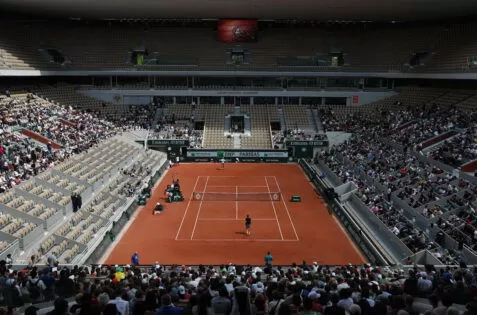
The French Open is a tournament steeped in history and tradition, with its iconic Parisian red clay courts and unforgettable battles. From Rafael Nadal’s record-breaking 14 titles to the marathon final between Jannik Sinner and Carlos Alcaraz, the tournament has always been a source of excitement and drama for tennis fans around the world. But amidst all the excitement, one thing has remained constant – the French Open’s refusal to ditch line judges in favor of technology.
The tournament’s story began in 1891 as a French-only event, but by 1925, it opened its doors to international players. In 1928, it found its permanent home at Stade Roland Garros, where it has been held ever since. Over the years, the French Open has seen many changes and innovations, but one thing has remained the same – the use of line judges.
In recent years, other Grand Slam tournaments like the US Open and Australian Open have made the switch to using technology for line calls. This move has been met with mixed reactions, with some praising the accuracy and efficiency of the technology, while others argue that it takes away from the human element of the game.
Despite the growing trend towards using technology, the French Open has remained steadfast in its decision to stick with line judges. This decision has been met with both praise and criticism, but tournament officials have stood by their choice, citing the importance of maintaining the integrity and tradition of the game.
One of the main arguments against using technology is that it takes away from the human element of the game. Tennis is a sport that requires not only physical skill, but also mental fortitude and the ability to make split-second decisions. Line judges play a crucial role in this aspect of the game, as they are responsible for making calls in real-time and under pressure. By removing them from the equation, some argue that the game loses an essential element.
Moreover, technology is not infallible. Despite its advanced capabilities, it is not immune to errors. In fact, there have been instances where technology has made incorrect calls, leading to controversy and frustration among players and fans alike. This is something that the French Open organizers are keen to avoid, as they believe that the use of line judges adds an element of fairness and unpredictability to the game.
Another argument in favor of keeping line judges is the impact it has on the players. Tennis is a physically and mentally demanding sport, and players rely on the support and encouragement of the crowd to push through tough matches. The presence of line judges adds to the atmosphere and intensity of the game, creating a unique experience for both players and spectators. Removing them would not only take away from the overall experience but could also potentially affect the players’ performance.
The French Open’s decision to stick with line judges has also been praised for its commitment to tradition and history. The tournament has a rich legacy, and the use of line judges is a part of that. It is a nod to the past and a reminder of the tournament’s roots. By refusing to ditch line judges, the French Open is staying true to its identity and honoring the players who have graced its courts over the years.
In conclusion, the French Open’s decision to continue using line judges is a bold one, especially in a time where technology is becoming increasingly prevalent in sports. However, it is a decision that is rooted in the tournament’s values and beliefs. The French Open is not just a tennis tournament; it is a celebration of the sport and its history. And by keeping line judges, it is staying true to that celebration. So, as we eagerly await the next edition of the French Open, let us appreciate the role of line judges and the unique experience they bring to the game.