
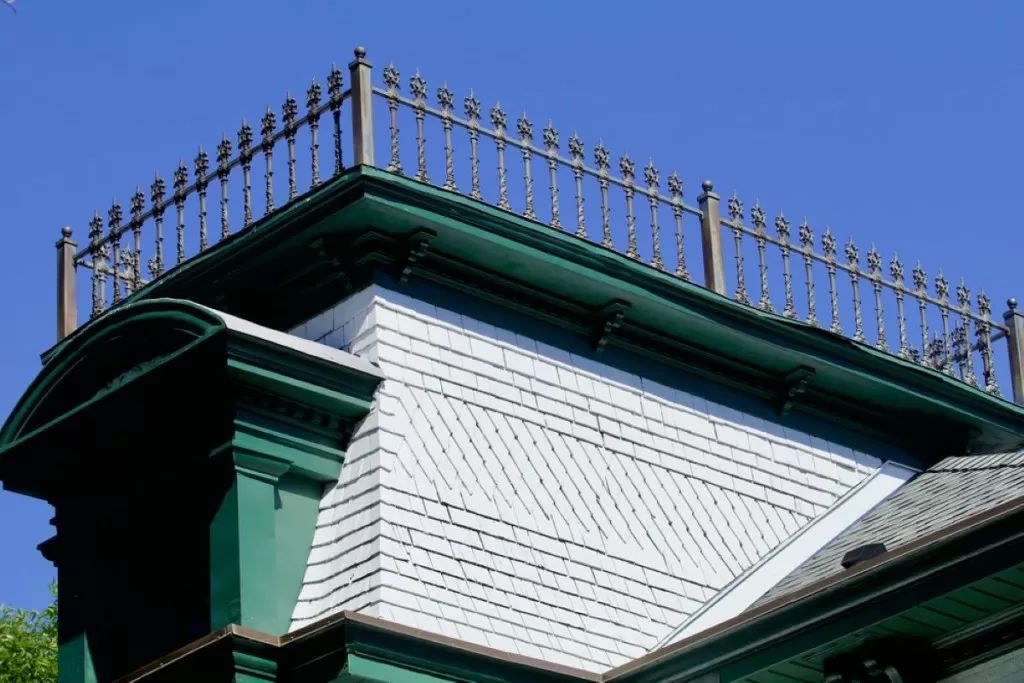
Houses with widow’s walks have always been a source of fascination and mystery. These charming, rooftop balconies have captured the imagination of many, with their romanticized connection to the sea and the stories of heartbroken wives waiting for their husbands to return from their voyages. But the truth behind these architectural features may surprise you.
The legend surrounding widow’s walks dates back to the 19th century, a time when many men went to sea for long periods of time, leaving their wives and families behind. It was believed that these wives would often climb to the rooftop balcony, known as the widow’s walk, to look out for their husband’s ships returning from their journeys. However, this popular notion may not be entirely accurate.
In reality, widow’s walks were not solely used for this purpose. They were originally designed as a functional part of the house, providing access to the roof for maintenance and repairs. The name “widow’s walk” is believed to have originated from the term “widow’s watch,” which was used to describe the small platform on top of a ship’s mast where the lookout would stand.
These rooftop balconies were also a status symbol for wealthy homeowners during the 19th century. It was a way for them to showcase their wealth and social status, as only the affluent could afford to add such a lavish feature to their homes. In addition, widow’s walks were also used as a place for leisure and entertainment. Families would gather on the rooftop to enjoy the views and the fresh sea breeze, making it a popular spot for socializing.
Despite the romanticized notion of the lonely wife waiting for her husband’s return, there is no evidence to suggest that widow’s walks were exclusively used for this purpose. In fact, many wives would have been busy managing the household and their businesses while their husbands were away. Furthermore, the wives of sailors and fishermen often had to work alongside their husbands, making the idea of them waiting at home rather unlikely.
But the legends and stories surrounding widow’s walks have continued to capture our imagination, making them a beloved feature in many coastal homes. Today, these rooftop balconies are still sought after by homeowners, not for their supposed connection to the sea, but for their practicality and charm.
The addition of a widow’s walk can greatly enhance the curb appeal and value of a home. It offers a unique vantage point for enjoying the surrounding views and adds character to the overall design of the house. Many homeowners also use it as a private retreat, away from the hustle and bustle of daily life.
If you are considering purchasing a home with a widow’s walk, it is important to keep in mind that it may come with additional maintenance and repair costs. Due to its exposed location, the rooftop balcony is susceptible to weather damage and may require regular upkeep. However, the benefits and enjoyment it brings to a home far outweigh these minor inconveniences.
In conclusion, houses with widow’s walks have a story to tell, but it is not a sad one. These charming rooftop balconies have a rich history and have evolved from a functional feature to a symbol of wealth and status. While the romanticized legend may not be entirely true, the allure and fascination surrounding widow’s walks will continue to live on for generations to come. So, if you have the opportunity to own a home with a widow’s walk, embrace it and create your own story to tell.